
Why hosts like nursing students as housemates
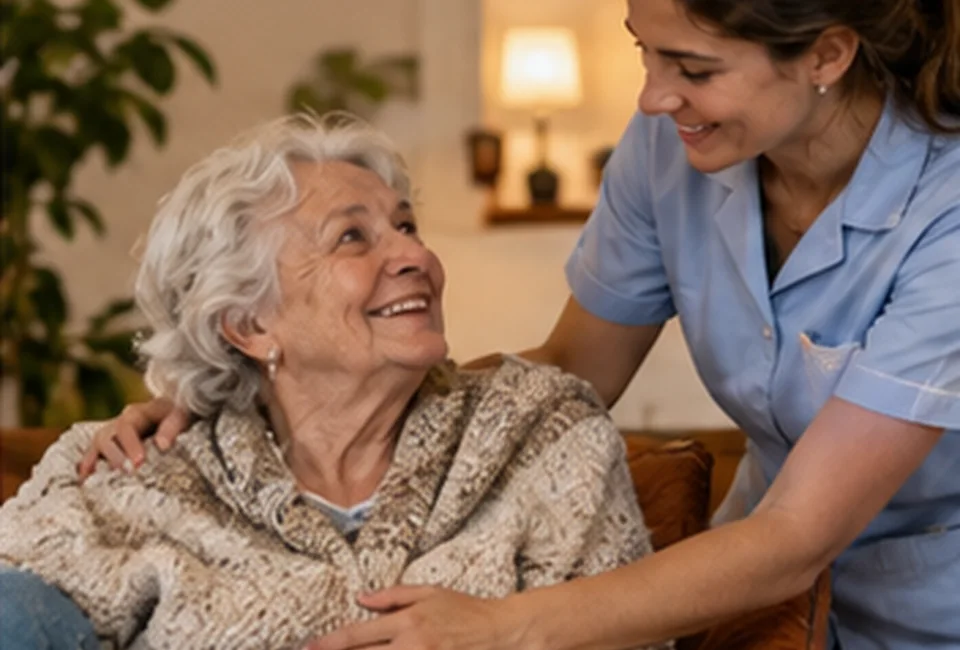
Host families often welcome applicants from nursing schools. These young people are used to older patients, can talk calmly about a fall or tiredness, and quickly notice when an elderly person seems different from usual, which reassures relatives who live far away.
Comfortable with very old age
From their first year, French nursing students rotate through care homes, geriatric wards and rehabilitation units. They understand swallowing difficulties, evening confusion and the reluctance to be a burden, all of which makes daily life with an eighty-year-old easier to navigate.
A personal strength, not part of the bargain
That background remains personal and is never traded for reduced rent. The French homesharing contract, set out in housing law since 2018, covers presence and small favours; it creates no health role whatsoever, whatever the young person happens to be studying.
How homeshare schemes draw the boundary
Homeshare charters, in France and across the Homeshare International network, separate companionship, everyday favours and professional help. The housemate is neither a care worker nor an on-call nurse: they share a home, lend a hand and raise the alarm when worried.
The hard line: no clinical tasks in a homeshare
Changing dressings, insulin injections, filling a pill organiser, monitoring a wound or taking regular blood pressure readings all belong to a nurse working professionally on a doctor's prescription. Each should be excluded in writing in the agreement signed by host and housemate.
| Situation | What the housemate may do | Who actually steps in |
|---|---|---|
| Prescribed dressing or injection | Nothing | Self-employed nurse or SSIAD team |
| Preparing the week's medication | Nothing | Nurse or pharmacist |
| Personal care for a dependent person | Nothing | Care assistant from a home care service |
| Night-time fall with no visible injury | Reassure, call emergency services or family | GP or emergency line depending on severity |
| Upcoming medical appointment | Note it on the shared calendar | The host and relatives |
| Unusual tiredness noticed | Tell the family or the charity | GP |
Why even a qualified nurse should hold back
A registered nurse who treats a host at home outside any declared practice works without records, without a prescription and without suitable professional insurance. If something went wrong, questions of liability would arise without the protection that salaried or independent practice normally provides.
How the slide into informal care happens
It usually starts innocently: checking a red patch of skin, then redoing a dressing one Sunday, then handling eye drops every evening. Within months the housemate has become an unofficial carer, and the family quietly cuts back professional visits.
In an emergency, act like any bystander
If the host collapses, the housemate does what any member of the public would: call the emergency number, apply the first aid they know and alert relatives. That duty to assist has nothing to do with planned, repeated care.
Fitting homesharing around nursing school
French nursing training leading to the state diploma lasts three years and alternates classroom teaching with clinical placements. The timetable therefore changes every few weeks, something the host needs to grasp from the first meeting to avoid disappointment later on.
Long shifts, nights and weekends
On a hospital placement, a student may work twelve-hour days, weekends or nights. The presence schedule promised to the host should be drawn up placement by placement, with a family back-up plan for the heaviest weeks of the year.
What it costs and what it saves
The housemate's contribution stays modest and is negotiated with the charity. Students may apply for the health and social studies grant run by their region and receive small placement allowances. On the host side, prescribed nursing care is reimbursed by French health insurance, usually at 60 % in 2026, more for long-term conditions.
Seven steps to a sound agreement
- Share the expected placement calendar for the year with the charity.
- List, with the host and family, the health professionals already involved.
- State in the agreement that the housemate performs no clinical tasks.
- Post the numbers of the GP, nurse and relatives in the kitchen.
- Decide what the housemate does after a fall or a night-time malaise.
- Book a monthly check-in with the charity during night placements.
- Review the arrangement if the host's health changes significantly.
How professional home nursing works in France
When an older person needs care, the doctor writes a prescription and the family chooses a provider. This route guarantees written records, coordination with the GP and insurance reimbursement, none of which a well-meaning housemate can offer, however skilled.
Self-employed nurse, SSIAD or hospital at home?
Self-employed nurses handle one-off or daily procedures. A home nursing service, known as SSIAD, supports ill or dependent older people on prescription with nurses and care assistants. Hospital at home takes over for heavy treatment under a facility's responsibility. In the UK, district nurses play a comparable role.
Mistakes to avoid
- Letting the housemate have a look at dressings between professional visits.
- Cutting back nurse visits because a student lives in.
- Handing the housemate responsibility for medication boxes.
- Promising fixed hours without allowing for night placements.
- Failing to tell the charity when the host's health declines.
Questions people ask
These answers are aimed at nursing students, young nurses and the families thinking of hosting them; for any specific medical concern, the host's GP remains the reference contact for everyone living under the same roof.
Can a nursing student remind the host to take medication?
A spoken reminder, as any relative might give, is part of ordinary life. Taking tablets out, preparing them or checking they were swallowed is professional work. The boundary should be discussed and written down so it does not drift over time.
Can a 28-year-old qualified nurse still be a homesharer?
Yes, as long as she is under 30. Twelve-hour hospital shifts can suit an independent host who mainly wants someone at home overnight. Her profession still does not allow her to treat the host within the homeshare.
Should the charity be told about the host's health?
The charity benefits from knowing the host's level of independence and which professionals visit, so it can propose a suitable match. Medical details remain confidential and are the host's to share; only what daily life together requires is passed on.
May the housemate call the visiting nurse if worried?
Yes, if the host and family agree and the number is on the posted list. The housemate then reports an observation, such as a dressing that has come loose, without ever touching the care themselves.
Useful organisations and resources
- French seniors' portal – home care news — Official article on new options for receiving care at home, aimed at older people and carers.
- Cohabilis – network brochure — Brochure of the Cohabilis network and its member organisations supporting older hosts and young people.
- French seniors’ portal – APA at home — Personalised autonomy allowance at home: conditions and funding of professional help.
Official and legal references
- Setting up home care (French seniors' portal) — Official French page explaining prescriptions, providers and steps to receive nursing care at home.
- SSIAD – official definition — French public glossary describing home nursing services, who they serve and how they work on prescription.